Honorato Bonafé
La piel del tamborHonorato Bonafé, the director of Q+S, is a scandal journalist who treats information as both merchandise and leverage. He turns Pencho Gavira’s estranged marriage into a public image, sells and solicits confidences about the church crisis, and tries to bargain with Lorenzo Quart by threatening to expose his private life. His methods make him more than an intrusive reporter: he is an intermediary through whom financial, ecclesiastical, and personal conflicts are repackaged as scandal—and, ultimately, a victim whose death deepens the mystery he sought to exploit.
Identity and Introduction
Bonafé enters the story through the magazine cover that troubles Celestino Peregil on his way to a meeting in Triana. The cover shows Gavira’s wife, Macarena Bruner, leaving the Hotel Alfonso XIII at four in the morning with the bullfighter Curro Maestral. Peregil knows the image exists because he himself supplied the journalists with the information needed to take it. Bonafé’s publication has converted a private encounter into a conspicuous piece of gossip, one that threatens Gavira’s standing as both banker and husband.
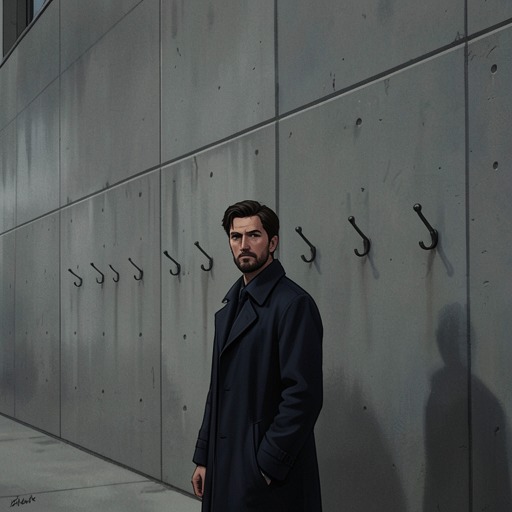
The novel presents Bonafé through a deliberately unflattering physical portrait. When he waits for Quart in the lobby of the Hotel Doña María, he wears the same rumpled beige suit as at their earlier encounter; his hair is lacquered, his eyes small and watchful, and his soft, heavy appearance is matched by an obsequious smile. Later, Pencho Gavira notices his thick waist, loose jowls, small limp hand, and leather bag strapped to his wrist. These repeated details make Bonafé recognizable before his identity is confirmed after his death: the journalist’s body, like his manner, is rendered as part of the book’s satirical scrutiny of public respectability and private appetite.
Information as Commodity
Bonafé’s reporting is entangled with the same system of paid information that has compromised Peregil. Under financial pressure, Peregil has accepted a bearer cheque from Bonafé in return for confidences about the Roman priest, Gavira’s wife, and Nuestra Señora de las Lágrimas. Peregil’s access to Don Ibrahim and his two associates gives him a further stream of information, and he considers whether the dinner involving Macarena and Quart could yield another lucrative front page. He recognizes the danger: selling details about a priest is one thing; selling his employer’s wife a second time risks becoming institutional treachery. The temptation remains because, in Peregil’s calculations, information is money and cash is urgently needed.
Bonafé’s appetite is not confined to one source or one scandal. In a hotel conversation with Quart, he proposes an exchange: Quart should give him a couple of quotable details about the church and its parish priest, and Bonafé will provide a piece of information Quart lacks. He also offers, with a knowing reference to Quart’s nocturnal outings, to keep those private movements out of his reporting. The supposed bargain presents journalism as a market in which silence, disclosure, and personal exposure can all be negotiated.
Bonafé defends this practice by claiming that journalists can have a moral code and declaring that his religion is truth. Quart repeats the word back to him, exposing the distance between the lofty name Bonafé gives his vocation and the tactics he actually uses. Bonafé’s offer is not a disinterested pursuit of truth: it is a proposal to trade access for access, while keeping a threat in reserve. His moral language serves as a glossy surface over the transaction.
Reporting on the Church and the Bank
Bonafé has information about Príamo Ferro’s earlier disciplinary case, and he deploys it to discredit the priest. He tells Quart that Ferro, when short of money in his previous parish, sold valuable objects, including an image and paintings. The church record and police inquiries establish a more specific version: while serving at Cillas de Ansó, Ferro was investigated after a fifteenth-century panel and a crucifix disappeared. The panel, attributed to the Master of Retascón, was later sold through the Madrid auction house Claymore. Its director, Francisco Montegrifo, confirmed that Ferro had received payment, though the amount was a fraction of the eventual auction price. The ecclesiastical proceeding ended with a simple admonition.
The underlying allegation is therefore true, but the route by which it reaches Bonafé remains suspicious. After comparing the journalist’s information with the archival file and the police investigation, Quart wonders whether Bonafé’s source may have had an episcopal ring and the purple trim of a bishop’s cassock. The evidence does not establish the source’s identity, but Quart suspects that Archbishop Aquilino Corvo may not be displeased to see Ferro’s past circulate. Bonafé’s reporting thus enters an existing church conflict: a damaging fact can be genuine while its selective release still serves someone else’s interests.
Bonafé also approaches Gavira in person at an exhibition, shortly after the banker has been left alone beneath a painting by Valdés Leal. Gavira refuses his offered handshake and tries to dismiss him by directing him to his secretary. Bonafé follows, saying he is preparing a report about the church that interests Gavira. When Gavira claims not to understand, Bonafé briskly sketches the story he intends to publish: Banco Cartujano, the church and the land rezoning; Ferro’s doubtful standing and conflict with the Archbishopric of Seville; two deaths officially described as accidents; a special envoy from Rome; and Gavira’s beautiful wife, her aristocratic mother, and her connection with that Roman priest. He pauses when Gavira’s expression changes, then makes explicit the point of the approach: the story will run the following week, and Gavira’s words could carry considerable weight.
The encounter shows Bonafé turning a complicated conflict into a prospective package of headlines, images, deaths, money, and sexual intrigue. His mention of the church redevelopment makes him relevant to Gavira’s commercial interests, while his emphasis on Macarena and Quart presses upon the banker’s most personal vulnerability. The report is not merely an account of events; its promised publication becomes pressure on a participant who may want to influence what it says.
Pressure on Quart
Bonafé’s campaign against Quart begins in the hotel lobby after a long night. Quart arrives at the Hotel Doña María with an injured hand, and Bonafé is waiting in the lobby to speak to him. Quart tells him to leave and says that nothing involving him interests him. Bonafé persists, offering a generous exchange: a few quotable comments about the church and its priest in return for information Quart does not know, with the additional promise that they can avoid discussing Quart’s nighttime walks.
The implied exposure is personal as well as professional. Bonafé hints at Quart’s social life in Seville and tries to make silence part of the bargain. Quart considers how to respond but restrains himself, aware that a physical confrontation with a journalist over a woman’s name would be disastrous for a priest working for the Institute for External Works. The threat therefore succeeds in creating pressure even without a published article: Bonafé has made Quart’s private movements a bargaining chip and forced him to weigh anger against institutional consequences.
The journalist’s methods also sharpen the contrast between his claims and his conduct. He presents himself as a man of truth and codes, but he offers selective information for quotable remarks, threatens to publicize Quart’s movements, and trades on material about Macarena. The gap between principle and practice is the defining feature of his role: truth is invoked not as a restraint on exploitation but as the name of a commodity he hopes to control.
Death and Narrative Significance
Bonafé’s repeated approaches make his absence difficult to separate from the story’s unfolding danger. When Quart is confronted with a dead man, he recognizes the beige trousers, soft hand, and other familiar features before the police identify the body. The dead journalist is Bonafé, known throughout Seville; police liaison Simeón Navajo notes that he has been moving around the area in recent days and asks whether Quart wants to see him. His death turns the persistent reporter into part of the very mystery he had been covering.
Bonafé’s function in the narrative rests on the circulation of information and the consequences of its sale. Peregil feeds him confidential material for money; the magazine’s photograph of Macarena makes private conduct publicly legible; his account of Ferro’s past may be accurate yet politically useful to an ecclesiastical source; and his approach to Gavira turns the church’s future into a possible headline and a means of influence. His pursuit of Quart extends the same logic into personal surveillance. By the time Bonafé is found dead, he has crossed the interests of the bank, the church, the police, and the people caught between them. The journalist who sought to convert everyone else’s secrets into copy becomes an unresolved secret himself.